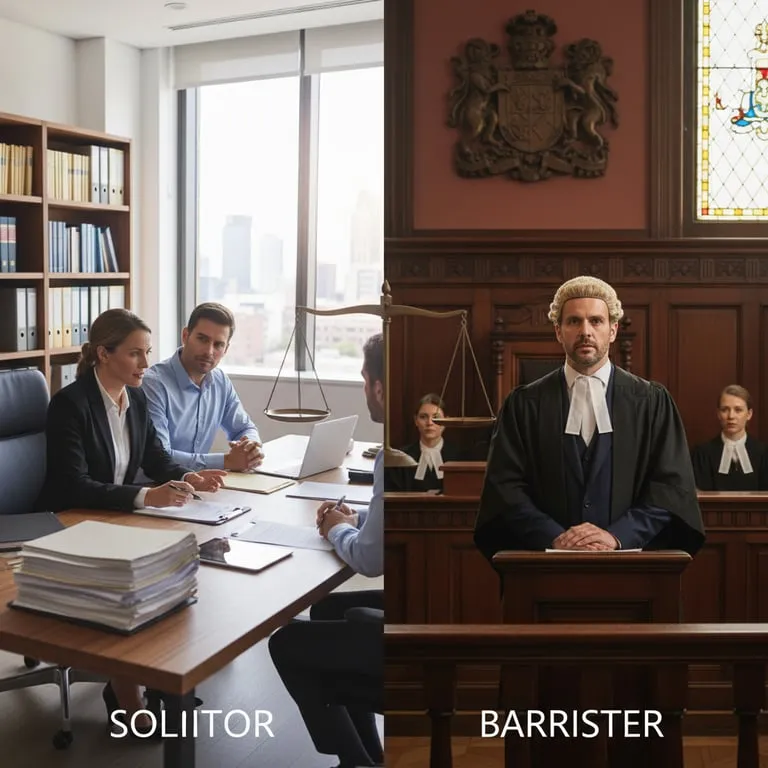
Key Differences Between Solicitor and Barrister Roles in UK Legal System
📌 Key Takeaways
- Solicitors are your first port of call, handling the nitty-gritty of legal work and chatting directly with you.
- Barristers are the courtroom wizards and deep legal thinkers, usually brought in by solicitors for their expertise.
- Think of solicitors as your legal GPs and barristers as the specialist surgeons called in for complex operations!
- Their roles, though different, are like two sides of the same coin, both essential for justice to work smoothly.
Ever felt a bit lost trying to figure out the UK’s legal world? It can sometimes seem like a secret language, can’t it? You hear “solicitor” and “barrister” and might think they’re just different words for the same job. But hey, as your friendly guide, I’m here to shed some light and make it all crystal clear! It’s actually a really neat distinction, and knowing it can make a huge difference, especially if you ever need a helping hand with legal stuff.
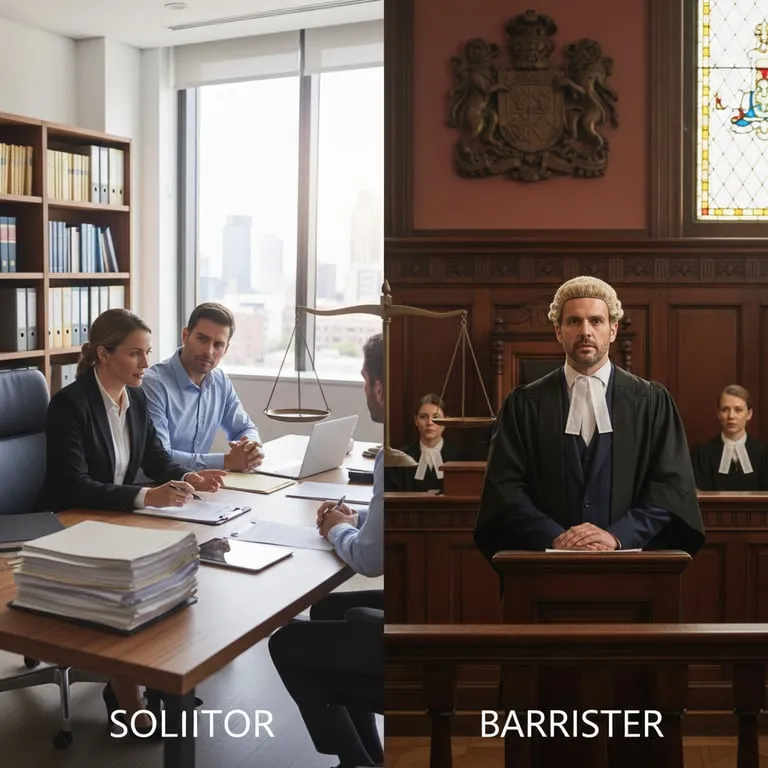
Let’s jump right in, shall we? Picture this: you’ve got a legal pickle. Who’s the first person you’d ring up? For most of us, it’s a solicitor. They’re like the go-to folks for everyday legal matters. They handle all sorts of things, from getting contracts and wills sorted to dealing with property sales and giving you that initial advice. You build a rapport with your solicitor; they really dig into your case, gathering all the bits and pieces needed. It’s a very hands-on, client-focused job, and honestly, it’s where the bulk of legal work happens! They’re the ones you’ll be talking to most frequently.
When Expertise is Key: Enter the Barrister
Now, this is where things get a bit more specialized. While solicitors are fantastic at managing the overall case and keeping you in the loop, when it comes to standing up in court or needing a super-expert opinion on a really tricky legal point, that’s often when a barrister steps onto the scene. You can think of them as the masters of courtroom debate or the legal academics. They are the absolute pros at advocacy, the ones who’ll be in court, passionately arguing your case with all their skill and persuasive flair. It’s a path that requires serious dedication to mastering specific legal areas and honing the art of public speaking and persuasive argument.
It’s not typically a case of you just strolling into a barrister’s office (though, thankfully, “direct access” routes do exist now!). Most of the time, your solicitor will be the one to “instruct” a barrister on your behalf. They’ll hand over all the juicy case details, and the barrister will then offer their expert advice or take the reins in court. It’s a really smart, collaborative setup: the solicitor handles the client relationship and case management, and the barrister provides that specialized advocacy or advisory service. This division ensures you get the best of both worlds – dedicated support and top-tier legal representation when it really matters!
Solicitor’s World
Client chats, contract writing, property transfers, will drafting, getting the case ready.
Barrister’s Stage
Courtroom battles, tough questioning, expert legal opinions, high court appeals.
The Daily Grind vs. The Day in Court
Let’s get a bit more into the weeds, shall we? A solicitor’s typical day might involve meeting with clients, usually in a calm office setting, digging through piles of documents, and coordinating with everyone else involved – think opposing solicitors, court staff, or even banks. They’re the masters of deadlines, filing paperwork, and generally keeping your legal journey running smoothly. The vibe is often one of meticulous organization and direct client care. It’s a career that really needs top-notch communication skills and a super sharp eye for detail, don’t you think?
A barrister’s life, on the other hand, can be quite a bit more dynamic, especially when they’re “on their feet” in court. Just imagine the buzz of the courtroom, the swish of the robes, the intense focus as arguments unfold. Barristers spend a good chunk of their time researching complex legal points, drafting official documents, and, of course, fighting hard for their clients. They often work out of shared offices called “chambers,” where they might split administrative costs and have clerks who help manage their schedules and client instructions. It’s a path that requires a deep dive into legal theory and the guts to perform under pressure. The adrenaline rush must be incredible!
Training Paths: Two Distinct Journeys
The road to becoming a solicitor and a barrister also follows different tracks, which is pretty cool when you pause to think about it. To become a solicitor, you’ll usually need a law degree or something equivalent, then complete a Legal Practice Course (LPC), followed by a period of practical training (like a training contract) at a law firm. It’s a very structured, step-by-step process.
Becoming a barrister involves a law degree or equivalent, then the Bar Practice Course (BPC), and after that, a year-long apprenticeship known as pupillage in a barrister’s chambers. Pupillage is famously competitive and really tests a budding barrister’s skills in a practical, real-world setting. This thorough training ensures that both professions are filled with highly capable and dedicated individuals, each playing their vital role in our justice system. It really highlights the commitment involved, doesn’t it?
So, What’s the Bottom Line?
And there we have it! While both solicitors and barristers are legal eagles dedicated to justice, their jobs, their training, and their daily routines are wonderfully different. One is your trusted advisor and case manager, the other your expert courtroom performer or specialist opinion guru. Getting this distinction is key to knowing exactly who to turn to and what to expect. It’s all about making sure you get the right legal help for what you need, don’t you think? It’s quite remarkable how the legal system is set up to offer such specific expertise.
Got More Questions?
Can a solicitor actually represent me in court?
Yep, solicitors can represent clients in the lower courts (think Magistrates’ Courts and County Courts). For trickier cases or appearances in higher courts, they’ll often bring in a barrister, although some solicitors have gained the necessary higher rights themselves.
How do I know if I need a solicitor or a barrister?
Generally, you’ll start with a solicitor for most legal issues. If your case needs a specialist in court or a complex legal opinion, your solicitor will usually suggest and hire a barrister for you.
Are barristers generally more expensive than solicitors?
Fees can really swing depending on how complex the case is and how experienced the professional is. Barristers’ fees are often structured differently, especially for court time, and can sometimes be higher for that specialized advocacy. But, solicitors’ fees for handling a case over a long period can also add up significantly. Always chat about costs upfront!
What exactly is ‘pupillage’?
Pupillage is the essential on-the-job training for anyone wanting to become a barrister. It usually lasts a year, where they learn the ropes by working closely with experienced barristers in their chambers.