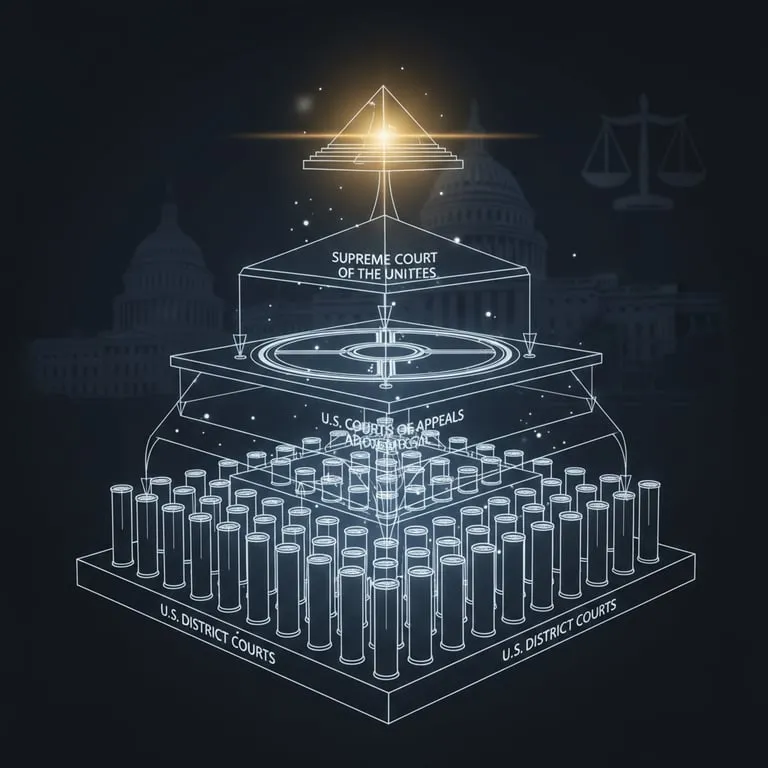
Understanding the Structure of the US Federal Court System Explained
Ever found yourself scratching your head, wondering how all those courts in the U.S. federal system actually work together? It can feel like a bit of a maze sometimes, right? Don’t you worry, because I’m here to walk you through it, friend! Think of me as your friendly guide, ready to unpack this sometimes-tricky topic in a way that feels as natural as chatting over coffee. We’ll explore the different levels, what they do, and why understanding this structure is actually pretty darn important. Let’s get this journey started, shall we?
📌 Key Takeaways
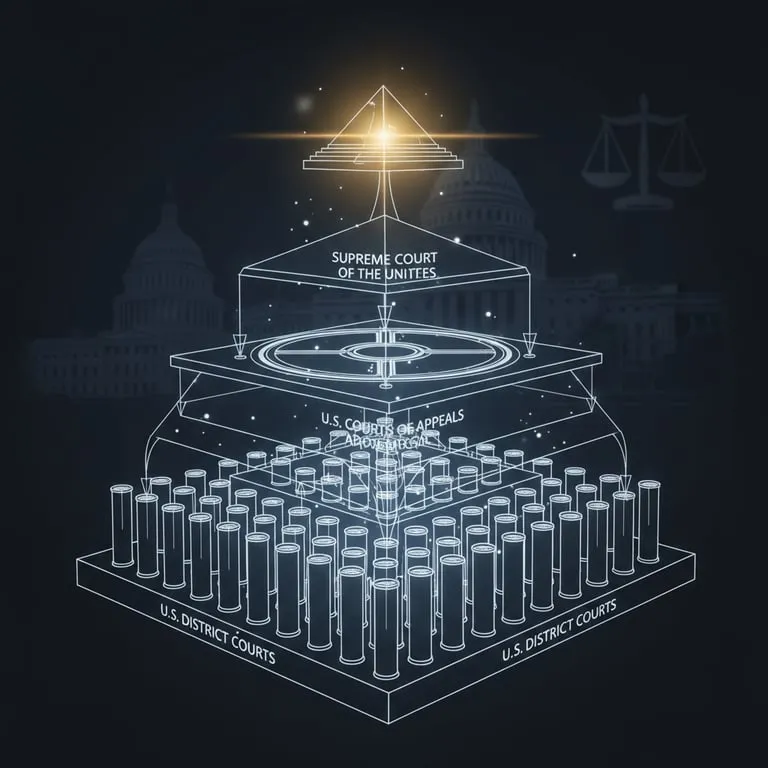
- The US federal court system is a three-tiered structure: District Courts, Circuit Courts of Appeals, and the Supreme Court.
- District Courts are the trial courts where cases begin.
- Circuit Courts of Appeals review decisions made by the District Courts.
- The Supreme Court is the highest court, and its decisions are final.
The Foundation: The District Courts
Okay, so at the very bottom of this whole structure, we have the United States District Courts. These are your go-to for where the vast majority of federal cases actually kick off. Think of them as the starting line for all sorts of legal battles, whether it’s a dispute between states, a case involving federal law, or even a constitutional issue. These courts hold trials, hear evidence, and decide the facts of a case. There are 94 federal judicial districts across the country, and each one has at least one courthouse. It’s in these bustling courthouses that the initial decisions are made, laying the groundwork for what might come next. It’s a pretty important job they have, wouldn’t you agree?
Stepping Up: The Circuit Courts of Appeals
Now, what happens if one of the parties in a case feels like the District Court made a mistake? That’s where the United States Courts of Appeals, often called Circuit Courts, come into play! These courts don’t retry cases or look at new evidence. Nope, their main gig is to review the decisions from the District Courts. They examine the legal issues and procedures to see if any errors were made. There are 13 Courts of Appeals, and they’re organized geographically into circuits. Imagine a panel of judges carefully rereading all the transcripts and briefs, deliberating with intense focus. It’s a critical step in ensuring fairness and consistency throughout the federal system, you know?
The Appeal Process
A party dissatisfied with a District Court ruling can appeal to the appropriate Circuit Court.
These courts act as a vital check and balance, making sure that the law is being applied correctly and uniformly. If a Circuit Court finds an error, they can affirm the lower court’s decision, reverse it, or send it back for further proceedings. Pretty neat, huh?
The Apex: The Supreme Court
And then, at the very top, we have the United States Supreme Court! This is the highest court in the land, and its word is pretty much final. The Supreme Court doesn’t hear every case that comes its way; it typically selects cases that involve significant questions of law or the Constitution. Think of it as the ultimate interpreter of our laws. When the Supreme Court makes a decision, it sets a precedent that all lower federal and state courts must follow. It’s a powerful position, and the justices’ decisions can shape the course of the nation. The impact is enormous, and the responsibility they carry is immense!
9
Justices on the Supreme Court
They hear oral arguments, consider briefs, and then issue their opinions. It’s a marathon of legal reasoning, and the whole country often waits with bated breath for their rulings. It’s truly fascinating to watch this process unfold!
Putting It All Together
So, to wrap it all up, you’ve got the District Courts as your trial courts, the Circuit Courts of Appeals reviewing those decisions, and the Supreme Court at the pinnacle, making the final call on the most important legal questions. This tiered structure ensures that cases are heard, reviewed, and ultimately decided with a focus on fairness and consistency. It’s a complex system, for sure, but understanding these basic levels gives you a much clearer picture of how justice is administered at the federal level. Isn’t that a relief? Knowing the layout makes it so much less intimidating!
Frequently Asked Questions
What’s the difference between federal and state courts?
That’s a great question! Federal courts handle cases involving the U.S. Constitution, federal laws, treaties, and disputes between states or citizens of different states. State courts, on the other hand, handle the vast majority of legal issues that arise under state law.
How does a case get to the Supreme Court?
A case usually gets to the Supreme Court through a writ of certiorari, where a lower court asks the Supreme Court to review its decision. The Supreme Court grants this writ in only a small percentage of cases it’s asked to hear.
Can a decision from a Circuit Court be appealed further?
Generally, no. The Circuit Courts of Appeals are the highest level of review for most federal cases. The only higher court is the U.S. Supreme Court, which, as we discussed, hears only a select number of cases.
How many judges are typically on a District Court?
The number of judges varies significantly by district, depending on the caseload. Some districts have just a few judges, while others have many more. This is different from the appellate courts and the Supreme Court, which have fixed numbers of judges (usually panels of three for appeals and nine for the Supreme Court).