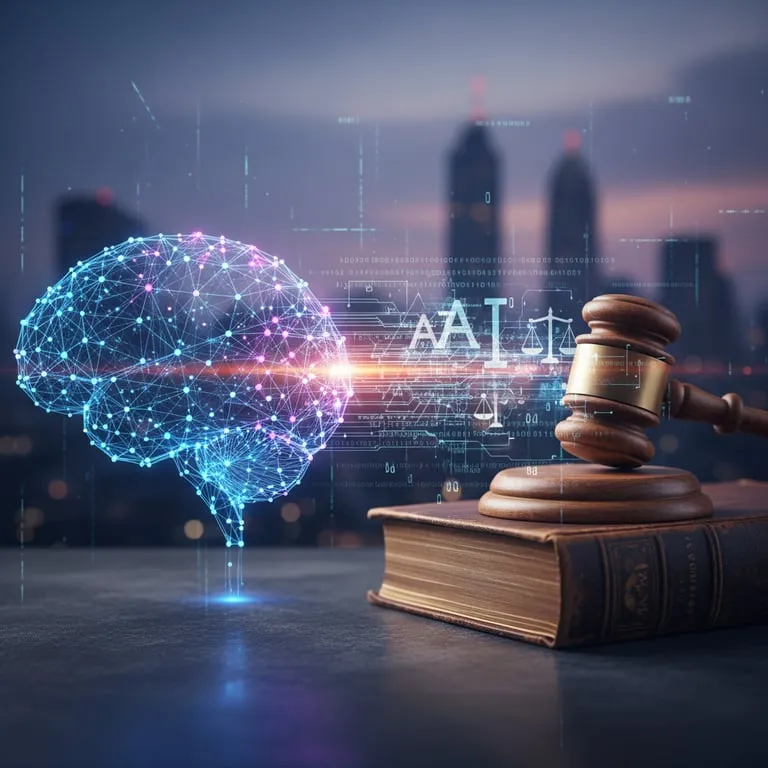
Understanding the Legal Implications of Artificial Intelligence
Hey there, friend! Ever stop and think about how AI is weaving its way into *everything* we do? It’s pretty mind-blowing, isn’t it? From the smart assistants in our pockets to the complex algorithms powering self-driving cars, AI is no longer just science fiction. It’s here, it’s now, and it’s changing the game. But with all this amazing innovation comes a tangled web of legal questions we’re just starting to untangle. It can feel a bit overwhelming, I know, but that’s exactly why I wanted to chat with you about the legal side of things today. Let’s break it down together, shall we? It’s like we’re navigating a new frontier, and understanding the rules of the road is super important!
📌 Key Takeaways
- AI presents novel legal challenges in areas like copyright, privacy, and liability.
- Determining who is responsible when AI makes a mistake is a major hurdle.
- Existing legal frameworks are being stretched and adapted to accommodate AI’s unique nature.
- Proactive legal understanding is crucial for both developers and users of AI technologies.
The Murky Waters of AI Liability: Who’s to Blame When Things Go Wrong?
This is one of the trickiest parts, don’t you think? Imagine a self-driving car gets into an accident. Who’s liable? Is it the owner who wasn’t even driving? The car manufacturer? The company that developed the AI software? Or maybe even the AI itself, if we ever get to that point? It’s a real head-scratcher! Currently, legal systems are grappling with this. For instance, in product liability cases, you usually need to prove a defect. But with AI, especially machine learning systems that adapt and change, pinpointing a specific defect can be incredibly challenging. Some experts suggest we might need new legal categories altogether to handle AI-induced harm, which is a pretty big shift, wouldn’t you agree? It feels like we’re standing at a crossroads, trying to decide the best path forward.
“The law must adapt to new technologies, not the other way around. We’re seeing that play out in real-time with AI, and it’s fascinating to watch.”
Autonomous Vehicles
Liability in accidents involving self-driving cars is a hot topic, pushing the boundaries of traditional legal definitions.
Software Developers
Who is responsible when the code makes a mistake? This question is central to AI liability discussions.
Copyright Conundrums: Can AI Create Art?
Let’s talk about creativity for a sec! AI is now generating art, music, and even writing. This brings up fascinating questions about copyright. Who owns the copyright to a piece of art created by an AI? Is it the programmer who wrote the code? The person who prompted the AI? Or can AI-generated work even be copyrighted at all? Current copyright laws generally require human authorship. The US Copyright Office, for example, has stated that works generated purely by AI are not eligible for copyright protection. This has sparked a lot of debate, as many see AI as a tool, much like a paintbrush or a camera, used by a human creator. It’s a real philosophical and legal puzzle we’re trying to solve!
AI-Generated Art
Focuses on the authorship and ownership challenges in creative works produced by machines, which is a rapidly evolving area.
AI-Generated Text
Similar issues arise with AI-written content, prompting questions about originality and intellectual property.
The core of the issue is the definition of “author.” If AI can’t be an author, then the output might not qualify for protection. This is why keeping up with rulings and discussions is so important!
Privacy in the Age of AI: Protecting Our Digital Selves
Oh, privacy! It’s such a huge concern, isn’t it? AI systems often rely on massive amounts of data, much of which can be personal. Think about facial recognition technology or personalized advertising algorithms. While they offer convenience and efficiency, they also raise serious privacy red flags. How is our data being collected, stored, and used? Are we giving informed consent? Regulations like GDPR (General Data Protection Regulation) in Europe and CCPA (California Consumer Privacy Act) are steps in the right direction, aiming to give individuals more control over their data. However, the sheer power and pervasiveness of AI mean we need constant vigilance and potentially even stronger protections. It’s a delicate balancing act, for sure!
Data Collection
AI’s hunger for data and the legal safeguards surrounding its acquisition are under constant scrutiny. We need to know how our data is being gathered.
Informed Consent
The challenges in obtaining meaningful consent for AI data usage are significant. Are we truly understanding what we agree to?
Regulatory Landscape
An overview of key privacy laws impacting AI development and deployment, showing a global effort to manage these concerns.
Staying informed about privacy policies and your rights is more important than ever as AI becomes more integrated into our daily lives.
Moving Forward: Staying Ahead of the Curve
It’s clear that the legal landscape surrounding AI is still very much under construction. It’s complex, rapidly evolving, and affects so many aspects of our lives, isn’t it? For anyone involved in developing, deploying, or even just using AI technologies, staying informed is absolutely key. Understanding these legal implications isn’t just about avoiding trouble; it’s about ensuring that AI develops in a way that is ethical, fair, and beneficial for everyone. We’re all part of this journey, and a little legal awareness goes a long way, don’t you think? Let’s keep learning and discussing!
Think of it like learning to drive – you need to know the rules of the road to navigate safely and responsibly. With AI, the “road” is constantly changing, so continuous learning is essential!
Frequently Asked Questions
Can AI own intellectual property?
Currently, most legal systems require human authorship for intellectual property rights. So, purely AI-generated works typically cannot be copyrighted or patented in their own right, though the AI system itself, as a creation, can be patented or protected by copyright if developed by humans.
What happens if an AI makes a medical diagnosis error?
This is a major area of concern. Liability could fall on the AI developer, the healthcare provider who used the AI, or the institution. It often depends on whether the AI was considered a tool used by the professional or an autonomous decision-maker, and what duty of care was breached.
How is AI data privacy regulated globally?
Regulations vary significantly. Key frameworks include the EU’s GDPR, which imposes strict rules on data processing and consent, and the US’s sectoral approach with laws like HIPAA for health data and CCPA for consumer data in California. Many countries are developing their own AI-specific regulations, aiming for global harmonization where possible.
Are AI developers liable for biased AI outcomes?
Yes, developers can be held liable if their AI exhibits discriminatory bias that leads to harm, especially if they failed to take reasonable steps to identify and mitigate such biases. This ties into existing anti-discrimination laws and emerging AI-specific guidelines. Proactive bias mitigation is key.