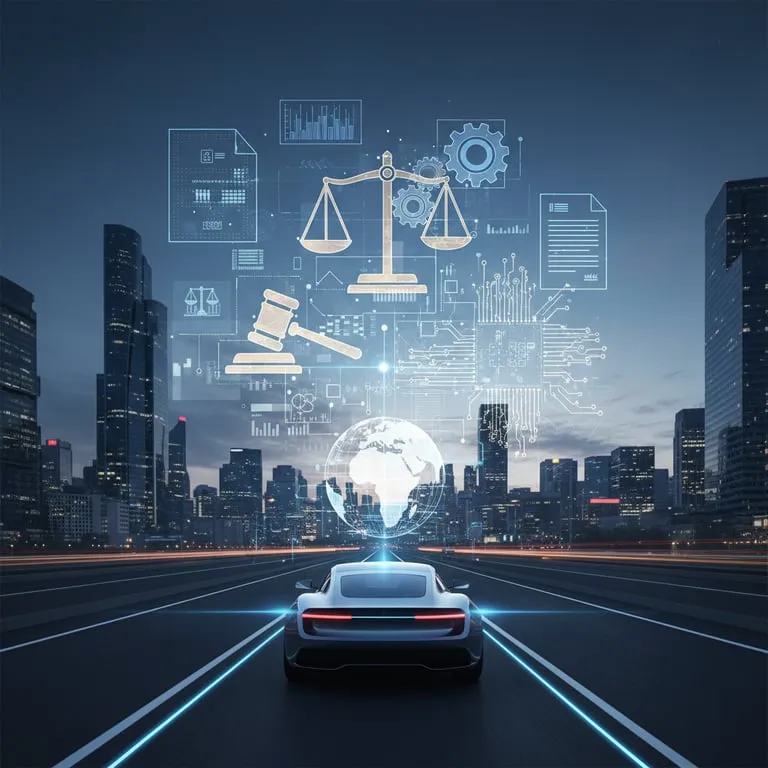
Understanding the Legal Aspects of Autonomous Vehicle Regulation
Imagine this: You’re cruising down the highway, hands off the wheel, a thrilling mix of freedom and a tiny bit of trepidation. Pretty wild, right?
Hey there, friend! Let’s chat about something that’s genuinely reshaping our world – autonomous vehicles, or AVs for short. It’s not just about cool tech that drives itself, oh no! It’s also about a whole new ballgame when it comes to laws and rules. I’ve been digging into this, and wow, there’s a lot to unpack! It feels like we’re standing at the edge of a legal frontier, and it’s super important we understand what’s happening, don’t you think?
📌 Key Takeaways
- The Regulatory Maze: AV laws are a patchwork, constantly evolving across states and countries. It’s a complex puzzle we’re piecing together!
- Liability Quandaries: Figuring out who’s responsible in an AV accident is a HUGE puzzle. We’re talking about new legal challenges here.
- Data Privacy Concerns: These cars collect tons of data, raising serious privacy questions that need careful consideration.
- Ethical Dilemmas: Programmers face tough choices about how AVs should behave in unavoidable crash scenarios. It’s the “trolley problem” in real life!
It’s exciting, and maybe a little overwhelming, to think about how these self-driving cars will integrate into our lives. But before we can truly embrace the future of mobility, we’ve got to get a handle on the legal landscape. That’s what we’re diving into today, so let’s get started!
Navigating the Complex Web of Regulations
So, the first thing that really struck me is just how… *varied* everything is. There isn’t one single, unified set of rules for autonomous vehicle regulation. Nope! It’s more like a quilt, stitched together with different regulations from federal agencies, state governments, and even local municipalities. It’s enough to make your head spin, honestly!
Federal vs. State: Who’s Driving the Bus?
At the federal level, agencies like the National Highway Traffic Safety Administration (NHTSA) are laying down guidelines and safety standards. Think performance requirements and voluntary guidance. They’ve been working hard on frameworks to help AV developers, providing a sort of roadmap. But here’s the kicker: states often step in with their own specific rules regarding testing, deployment, and even insurance requirements. This patchwork approach can create some real headaches for companies looking to roll out their AVs nationwide. It’s like trying to play a game where the rules keep changing depending on which state you’re in!
NHTSA’s Role
Focuses on vehicle safety standards & performance guidelines for AVs.
State Regulations
Often cover testing permits, operational rules, and liability frameworks.
The Challenge of Harmonization
What we really need, and what many are pushing for, is better harmonization. Imagine how much smoother things would be if there was a more consistent approach! This would not only benefit manufacturers but also give consumers more confidence as AV technology matures. It’s a balancing act, for sure, but one that’s crucial for widespread adoption. The pace of innovation is lightning fast, and the legal frameworks need to keep up, not stifle it, you know?
Who’s Responsible When Things Go Wrong?
Okay, let’s get into the nitty-gritty: liability. This is probably one of the most complex and debated areas in autonomous vehicle regulation. When a human driver causes an accident, fault is usually determined through established legal principles. But with an AV? It’s a whole different story!
The Liability Puzzle: Driver, Manufacturer, or Software?
Is the “driver” (who might not even be actively driving) liable? Or is it the automaker who designed the vehicle? What about the company that developed the self-driving software, or the sensor manufacturer? Each scenario could have different implications. We’re seeing discussions around product liability, negligence, and even new legal theories emerging to address these unique situations. It’s a genuine legal puzzle that courts and lawmakers are actively trying to solve. The number of reported AV-involved incidents, while still relatively low compared to human-driven vehicles, is something regulators are watching very closely.
“Determining fault in AV accidents requires a deep dive into the technology, system failures, and adherence to safety protocols. It’s not a simple cut-and-dry case, that’s for sure!”
Insurance Implications
And then there’s insurance! How will insurance models adapt? Will policies shift from individual driver coverage to manufacturer-based product liability insurance? These are the kinds of questions that keep legal minds busy. The current insurance landscape, built around human error, is going to need a serious overhaul. We’re talking about potentially massive shifts in risk assessment and premium structures. It’s a fascinating area to watch unfold, and vital for public trust!
Data, Privacy, and Ethical Crossroads
You know, it’s not just about who’s driving or who’s liable. These advanced vehicles are essentially data-gathering machines. And where there’s data, there are privacy concerns, right? Plus, we’re entering some pretty profound ethical territory.
Protecting Our Digital Footprints
Autonomous cars collect vast amounts of information – from where you go and when, to how you interact with the vehicle’s systems. This data is crucial for improving AV performance and safety, but it also raises big questions about who owns this data, how it’s stored, who can access it, and how it’s protected from breaches or misuse. Regulations like GDPR in Europe are setting precedents, but specific AV data privacy laws are still very much in development globally. We need robust safeguards to ensure our privacy isn’t compromised as AVs become more integrated into our lives. It’s a delicate balance between innovation and individual rights, wouldn’t you agree?
The “Trolley Problem” in Code
And then there are the ethical dilemmas. You’ve probably heard about the “trolley problem” – that classic thought experiment. AVs might face unavoidable accident scenarios where they have to make a choice: swerve and hit one person, or continue straight and hit a group. How should these vehicles be programmed to make such life-or-death decisions? Should they prioritize the occupants, pedestrians, or minimize overall harm? These aren’t easy questions, and there’s no universal consensus. Developers are grappling with embedding ethical frameworks into algorithms, and society needs to have these difficult conversations. It’s a stark reminder that technology isn’t neutral; it reflects the values we program into it!
Data Privacy
Ensuring secure storage and ethical use of collected vehicle data.
Ethical Programming
Addressing unavoidable accident scenarios and decision-making protocols.
Looking Ahead: The Evolving Legal Landscape
Phew! We’ve covered quite a bit, haven’t we? The legal aspects of autonomous vehicle regulation are complex, dynamic, and incredibly important. It’s not something that’s going to be solved overnight. We’re in a period of significant transition, where technology is outpacing traditional legal structures.
But that’s okay! It means we get to be part of shaping this future. Open dialogue between policymakers, industry leaders, ethicists, and the public is absolutely key. As consumers, staying informed helps us understand the technology we’re adopting and advocate for sensible regulations that promote safety, innovation, and fairness. It’s a journey, and I’m genuinely excited to see how it all unfolds. We’ve got this!
Key Questions We’re Still Asking
What happens if an AV violates traffic laws?
This is a big one! Currently, enforcement might fall on the human occupant if they were expected to supervise, or potentially the manufacturer if it’s a system error. Legislation is actively trying to clarify this. It’s a real grey area we’re navigating!
How will AVs impact commercial trucking and logistics?
This is huge! We’re looking at potential changes in delivery times, costs, and the workforce. Regulations are being developed to address safety and operational standards for autonomous trucks, which could revolutionize supply chains.
Will cybersecurity be a major legal hurdle for AVs?
Absolutely! The risk of hacking is a significant concern. Manufacturers will face legal obligations to ensure their systems are secure, and liability for damages caused by cyberattacks is a critical legal question being addressed.
What’s the timeline for widespread AV adoption from a legal standpoint?
It’s hard to put an exact date on it! Legal and regulatory frameworks need time to mature. While some areas might see more AVs sooner, widespread adoption will likely depend on clear, robust, and universally accepted regulations being in place.