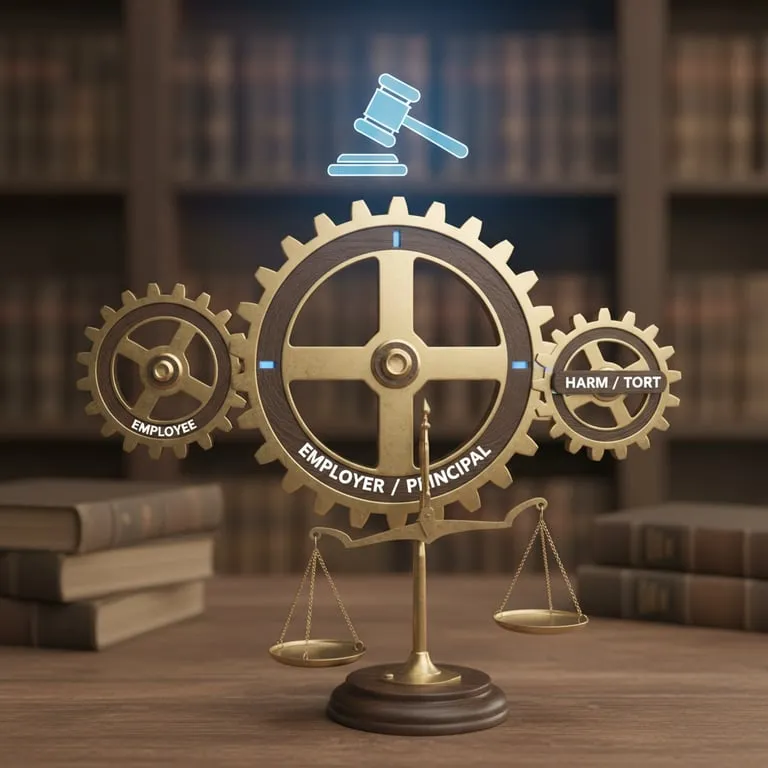
Understanding the Legal Principles of Vicarious Liability in Torts
Hey there, friend! Ever found yourself in a sticky situation where someone else’s actions caused harm, and you’re wondering if you might be on the hook for it? It’s a question that pops up more often than you might think, especially in the world of tort law. Today, I wanted to chat a bit about something called vicarious liability. It sounds super formal, doesn’t it? But really, it’s all about holding one person responsible for the wrongful acts of another. Think of it like this: sometimes, the law says, “You’re not the one who messed up, but because of your relationship with the person who did, you’ve got to take responsibility.” Sounds a little unfair at first glance, maybe? Let’s dive in and break down how this whole concept works, okay? We’ll make it super clear, promise!
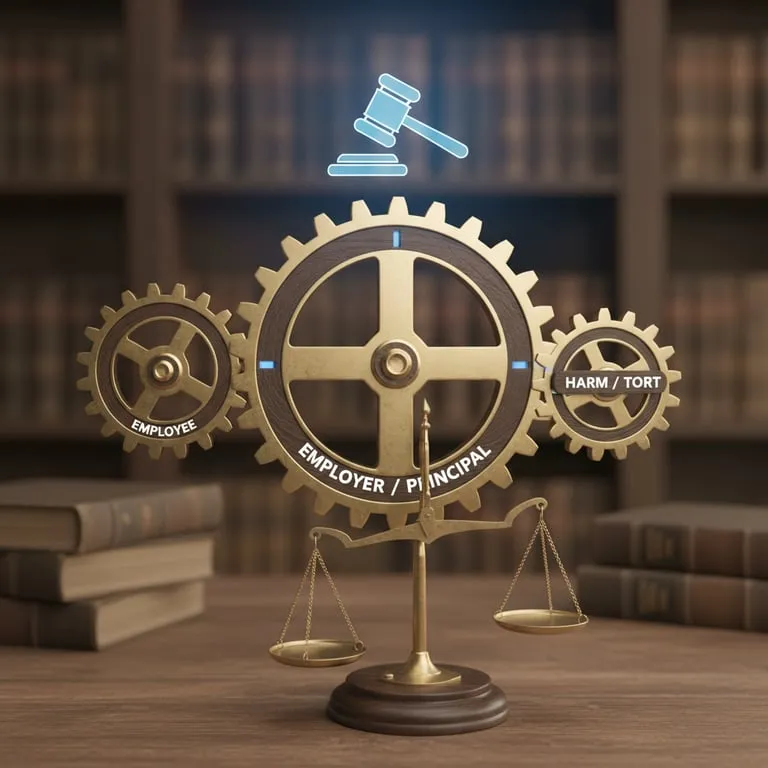
📌 Key Takeaways
- Vicarious liability means one party is held responsible for the tortious acts of another.
- The most common scenario involves an employer being liable for an employee’s actions (respondeat superior).
- Key elements include an employer-employee relationship and the act occurring within the scope of employment.
- It’s a bit like being indirectly blamed, and it has some serious implications!
When Does This “Second-Hand” Responsibility Kick In?
So, when does this whole vicarious liability thing really come into play? The most famous, and probably the most common, situation is the employer-employee relationship. This doctrine often goes by a fancy Latin phrase: respondeat superior, which basically means “let the master answer.” It’s the idea that an employer can be held liable for the negligent or wrongful acts of their employee, but only if those acts were committed while the employee was acting within the scope of their employment. Imagine a delivery driver who’s rushing to make a delivery and, in their haste, runs a red light and causes an accident. The driver is definitely at fault, but because they were on the clock, doing their job, the delivery company might also be held responsible for the damages! It’s a bit like a ripple effect, you see?
Respondeat Superior in Action
An employer is liable for an employee’s torts if committed within the scope of employment. This covers acts that are authorized or those that are incidental to the job, even if they are done in a forbidden manner!
What Exactly is “Scope of Employment”?
This is where things can get a little tricky and nuanced, honestly. It’s not as simple as just being on the clock. Courts look at several factors. Was the employee doing something that their employer authorized them to do? Was the act of the same general nature as those authorized? Did the act occur substantially within the authorized time and space limits of the employment? And importantly, was the employee motivated, at least in part, by a purpose to serve the employer? If the employee veers way off course, doing something purely for their own personal reasons, that usually falls outside the scope. So, that delivery driver running the red light? That’s probably within the scope. But if that same driver, on their route, decided to stop at a bar for a drink and then caused an accident? That’s likely a personal detour, and the employer might not be liable.
Beyond Employment: Other Relationships
Now, while employer-employee is the big one, vicarious liability isn’t *exclusively* tied to that relationship, though it’s the most frequent guest at the party. You might also see it in certain types of partnerships, where one partner can be liable for the torts of another committed in the course of partnership business. Think of it as a shared responsibility for the business’s actions. Another area is where one person has a specific legal duty to control another, like a parent for a minor child in some limited circumstances, or a vehicle owner who negligently entrusts their car to an incompetent driver. These situations are often more specific and depend heavily on the jurisdiction’s laws, but they show that the law sometimes extends liability beyond direct causation. It’s all about fairness and ensuring there’s a responsible party to seek recourse from, you know?
Of vicarious liability cases involve employer-employee relationships.
Key factors often examined for “scope of employment”.
Why Does This Rule Even Exist?
That’s a fair question! It might seem harsh to hold someone responsible for what someone else did. But there are a few good reasons behind it. One is the idea of “deep pockets.” Often, an employer or a business has more financial resources than an individual employee, making them better able to compensate the injured party. It also encourages employers to be more careful in selecting, training, and supervising their employees. If they know they can be held liable, they’re more likely to ensure their staff acts responsibly. Plus, it simplifies things for the injured person; they don’t have to chase down every single employee, they can go after the entity that has the overall control and resources. It’s a way to balance responsibility and ensure justice is served, even if it’s indirectly!
Navigating the Nuances: What If?
Let’s consider a common myth. People sometimes think that if an employer explicitly tells an employee “Don’t do X,” and the employee does X anyway and causes harm, the employer is automatically off the hook. That’s not always true! Even if an employer prohibits a certain action, if that action is still done within the general scope of employment and to serve the employer’s interests, liability can still attach. For example, if a trucking company has a strict policy against speeding, but a driver speeds to meet a delivery deadline for the company, and causes an accident, the company could still be liable. The prohibition might be a factor, but it’s not always a get-out-of-jail-free card, you see? The focus remains on whether the type of act was related to the job.
“It’s fascinating how the law tries to weave a net of responsibility that sometimes catches more than just the direct actor, all in the pursuit of fairness and adequate remedy for harm done!”
Myth Buster: Independent Contractors
A big way employers *can* avoid vicarious liability is by hiring independent contractors instead of employees. Generally, employers aren’t liable for the torts of independent contractors. Why? Because they don’t have the same degree of control over how the work is done. Think of a painter you hire to paint your house. You tell them the job, the color, and the deadline, but you don’t dictate *how* they hold the brush or mix the paint. If they slip and fall and injure themselves, that’s their issue. If they cause damage to your neighbor’s property, generally, you aren’t liable because you didn’t control the details of their work. However, this isn’t a foolproof shield! If the work is inherently dangerous, or if the employer retains significant control, or hires an incompetent contractor for a risky job, liability can still arise. It’s a critical distinction, truly!
Wrapping It All Up
So, there you have it! Vicarious liability is a complex but crucial area of tort law. It reminds us that sometimes, responsibility stretches beyond the person who directly committed the wrong. It’s all about relationships, control, and ensuring that those who benefit from others’ labor can also bear some responsibility when that labor causes harm. It’s not always straightforward, and the specifics can really vary, but understanding the core principles gives you a much clearer picture, doesn’t it? Keep this in mind, and you’ll be able to navigate these situations with a bit more confidence!
What’s the difference between vicarious liability and direct liability?
Direct liability is when a person is held responsible for their own wrongful actions. Vicarious liability is when a person is held responsible for the wrongful actions of another due to a specific relationship.
Can an employer be liable if the employee was acting illegally?
Yes, sometimes! If the illegal act was committed within the scope of employment and perhaps in furtherance of the employer’s business, vicarious liability can still apply. For instance, if a salesperson commits fraud to secure a deal for their company.
What if an employee commits a tort outside of work hours?
Generally, if the tort is committed completely outside the scope of employment (e.g., during personal time, for purely personal reasons), the employer is not vicariously liable. The connection to the job duties is key!
Does vicarious liability apply to non-profit organizations?
Yes, the principles generally apply to non-profit organizations in the same way they apply to for-profit businesses, particularly concerning the actions of their employees acting within the scope of employment.
What is the “deep pockets” rationale for vicarious liability?
The “deep pockets” rationale suggests that employers or businesses often have greater financial resources than individual employees. This makes them better positioned to compensate injured parties, ensuring that victims can actually recover damages.