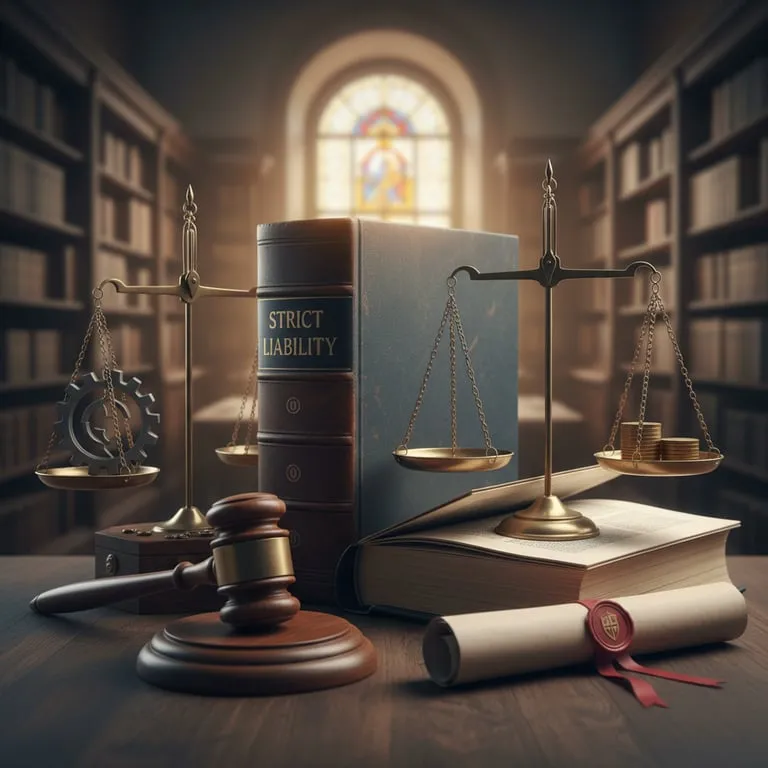
Understanding the Legal Terminology of Strict Liability Offenses
Hey there, legal eagles and curious minds! Ever find yourself scratching your head when someone mentions “strict liability offenses”? It sounds super serious, right? Like, a whole new level of “oops, I did it again” that doesn’t even need a “sorry”? Well, you’re not alone! Let’s break down this intriguing legal concept together, shall we? Think of me as your friendly guide through the sometimes-confusing world of law, making it as clear as a sunny day. We’re going to unpack what strict liability really means and why it matters. It’s not as scary as it sounds, I promise! Let’s dive in and clear up any confusion you might have. You’ll be explaining it to your friends in no time!
📌 Key Takeaways
- Strict liability means you can be held responsible for an action even if you didn’t intend to do anything wrong, and even if you took all reasonable precautions.
- The focus is on the act itself, not the mindset or intent of the person performing it.
- Commonly seen in areas like product liability, environmental law, and certain regulatory offenses.
- It’s a way to ensure public safety and deter harmful conduct by making certain activities inherently risky for those who undertake them.
What Exactly is Strict Liability?
So, imagine this: you’re having a fantastic picnic, and a rogue frisbee accidentally hits someone. In most cases, you’d look at whether you threw it carelessly, right? But in a strict liability scenario, it’s different. The law says, “Hey, you were involved in the activity that caused harm, so you’re responsible, period.” It’s less about your personal fault or “mens rea” (that’s legal jargon for a guilty mind!) and more about the result. The act itself is enough to establish liability. Crazy, huh?! It’s a legal shortcut that often aims to protect the public from potentially dangerous activities or products. The idea is that if you engage in certain activities, you accept the inherent risks that come with them, regardless of how careful you were. This is a significant departure from how we usually think about responsibility, where intent or negligence plays a big role. It truly makes you think about the consequences of our actions, doesn’t it?
The Core Principle
No fault, no problem? Not with strict liability! It’s all about the outcome. The law simply asks: did the prohibited act occur and cause harm? If yes, responsibility follows, regardless of intent.
Where Do We See Strict Liability in Action?
You might be surprised how often you encounter this concept, even if you don’t realize it! A big one is product liability. If a company manufactures a product that’s defective and causes harm, they can be held strictly liable. Think about a toaster that catches fire, even if the company had rigorous quality control. They put the product out there, and it was dangerous, so they’re on the hook. Another common area is environmental law. If a company pollutes a river, they might be liable for cleanup costs and damages, regardless of whether they meant to pollute or if they were following all the safety regulations they knew of at the time. Then there are certain regulatory offenses. For example, selling alcohol to a minor. Even if the seller genuinely believed the person was of age, if they were wrong, the seller could face penalties. It really highlights how some actions carry such significant potential for harm that the law places the burden of responsibility squarely on those who perform them. It’s a stark reminder of the responsibilities that come with certain activities!
“It’s not about what you knew, it’s about what happened. The law is often a blunt instrument, and strict liability is one of its sharper edges, designed to protect us all from potentially devastating consequences.”
Myth vs. Reality: Common Misconceptions
There are definitely some misunderstandings floating around about strict liability. A common myth is that it means you’re automatically guilty just for existing or being present! Nope, not quite. It’s tied to performing a specific act or engaging in a particular activity that is deemed inherently risky. Another misconception is that it’s always unfair. While it can seem harsh, the rationale is often rooted in public policy. For instance, in product liability, it encourages manufacturers to make their products as safe as humanly possible because they know they’ll bear the cost if something goes wrong. This benefits all consumers! The law recognizes that some activities, by their very nature, carry a high degree of risk that cannot be entirely eliminated, even with utmost care. Holding those who engage in these activities responsible ensures that the potential costs of any resulting harm are borne by the party best positioned to prevent it or to absorb the loss, rather than by innocent victims. It’s a crucial balance to strike!
Myth Busted!
Strict liability doesn’t mean “guilty without trying.” It means liability without needing to prove fault or intent. It’s a subtle but significant difference!
The Real Deal
It’s about incentivizing safety and ensuring accountability for inherently dangerous activities. The law places responsibility on those best equipped to manage the risks involved.
Why Does This Legal Concept Matter to You?
Understanding strict liability offenses isn’t just for lawyers! It affects consumers, businesses, and everyday citizens. For consumers, it means a higher degree of protection when using products or interacting with businesses that engage in risky activities. You have a better chance of being compensated if something goes wrong due to a product defect or a dangerous operation. For businesses, it’s a clear signal that engaging in certain operations comes with significant responsibility. It pushes them to invest heavily in safety and quality control. Ignorance of the law or a claim of having taken precautions generally won’t be a successful defense. It really emphasizes the need for robust internal checks and balances. So, next time you hear about strict liability, you’ll know it’s a powerful legal tool designed to enhance safety and ensure accountability in our society. It’s a fascinating aspect of law, isn’t it? It helps create a safer world for all of us, even if it sometimes feels a bit strict!
Frequently Asked Questions
Is intent ever considered in strict liability cases?
Generally, no! The defining feature of strict liability is that intent or fault (mens rea) is irrelevant. The focus is solely on whether the prohibited act occurred and caused harm. It’s all about the action and its outcome.
Are there defenses to strict liability?
While proving lack of intent isn’t a defense, there can be others depending on the specific offense. These might include things like assumption of risk by the injured party, or that the harm was caused by a third party or an “act of God.” It really varies case by case, so it’s always wise to consult with a legal professional!
Is strict liability the same as negligence?
Not at all! Negligence requires proving that someone failed to exercise reasonable care. Strict liability doesn’t require any proof of carelessness; the mere occurrence of the act leading to harm is enough. Think of negligence as requiring a “why” (carelessness), while strict liability just asks “what” happened.
Can businesses avoid strict liability?
It’s very difficult to completely avoid it if a business engages in activities subject to strict liability. The best approach is to have impeccable safety protocols and quality control to minimize the risk of harm occurring in the first place. Proactive measures are key!