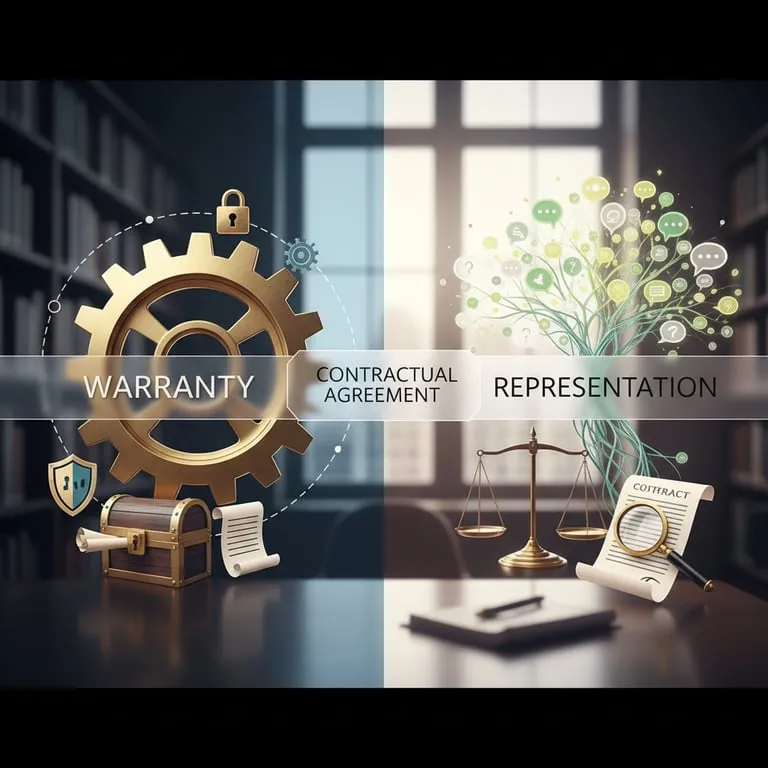
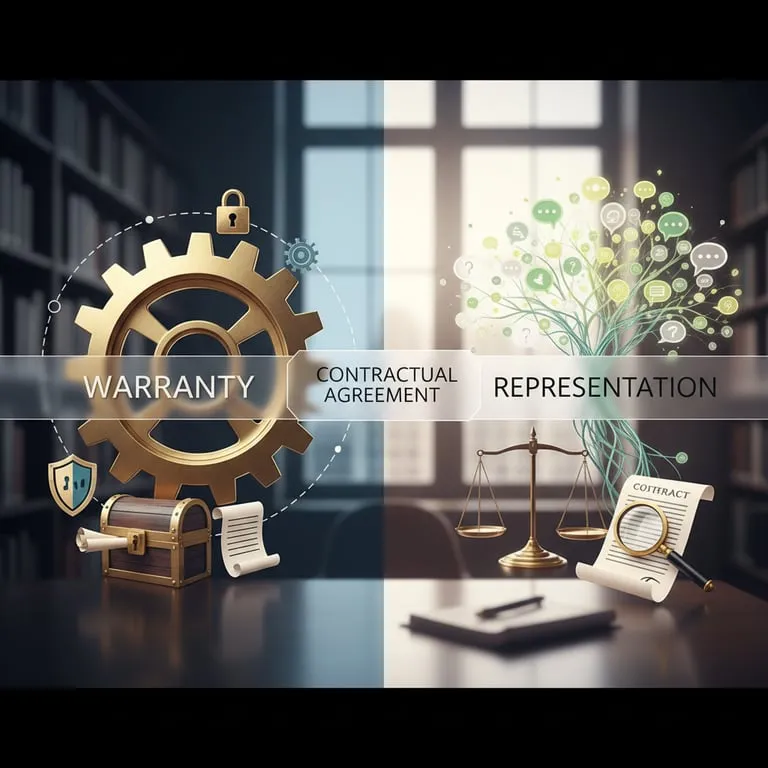
Key Differences Between Warranties and Representations in Contracts
📌 Key Takeaways
- Representations are statements of fact made before or at the time of a contract. They’re like setting the scene!
- Warranties are promises or guarantees that become part of the contract itself. Think of them as the plot twists you can rely on!
- Breach of representation might lead to rescission (undoing the deal) or damages, while breach of warranty typically only allows for damages (compensation).
- Understanding these distinctions is crucial for managing risk and ensuring your contracts are as sturdy as a brick house.
Hey there! Ever found yourself scratching your head over contracts, especially those terms that sound so alike, like “warranties” and “representations”? They can feel like trying to spot the tiny differences between two very similar shades of blue, right? It’s easy to get them mixed up, but understanding their unique roles is super important. I remember when I first started digging into legal documents, these two felt like little puzzles I needed to solve. So, I thought, why not share what I’ve learned with you, my friend? Let’s break down the key differences between warranties and representations in contracts, making sure you feel confident and clear on what they mean. It’s not as complicated as it sounds, I promise!
What Exactly Are Representations?
Think of representations as factual statements made by one party to another, usually before the contract is officially inked. Their main job is to provide information and encourage the other party to say “yes” to the deal. For example, imagine you’re looking to buy a used car. The seller might tell you, “This car has only had one owner and has never been in an accident.” That’s a classic representation! It’s a statement about the car’s past, presented as truth. If this statement turns out to be false, and you relied on it when deciding to buy, you might have the right to question the contract. It’s like the seller is painting a picture of what they believe the car to be, and you’re making your decision based on that picture.
The Essence of Representation
It’s all about factual statements that help shape the decision to enter into a contract. If they’re not true, the whole agreement might be called into question!
If a representation is proven to be false, it’s called a “misrepresentation.” The impact of this can be quite significant, potentially allowing the wronged party to seek damages or even to have the contract voided – essentially unwound as if it never happened. It’s a big deal because it relates to the very foundation upon which the agreement was built.
And What About Warranties?
Warranties, on the other hand, are like the sturdy promises woven directly into the fabric of the contract itself. They’re guarantees about the subject matter of the deal. Let’s stick with our car example: a warranty might state, “The engine of this car is guaranteed to be in good working order for the next 12 months.” Do you see the shift? This isn’t just a statement about the past; it’s a contractual promise about future performance. It’s a legally binding term that the seller agrees to uphold.
If the engine gives you trouble within that year, the warranty has been breached. In most cases, your remedy here is to claim damages – compensation for the cost of repairs or any other losses incurred due to the breach. Unlike a misrepresentation, a breach of warranty typically doesn’t give you the right to cancel the entire contract, though some agreements might allow for that. It’s like the seller confidently saying, “I stand behind this engine, and if anything goes wrong within this period, I’ll cover it.” That’s reassuring, isn’t it?
Representations
Statements of fact, usually made before the contract.
Focus: Inducing the contract.
Breach: Potential rescission or damages.
Warranties
Promises or guarantees, usually part of the contract.
Focus: Performance or quality of the subject matter.
Breach: Typically damages only.
The Crucial Difference: What Happens When Things Go Wrong?
This is where the rubber meets the road, folks! If a representation turns out to be false (misrepresentation), your options can be quite powerful. Depending on whether the misrepresentation was innocent, negligent, or fraudulent, you might be able to seek damages and potentially rescind the contract. Rescission is like hitting a reset button – the contract is treated as if it never existed. Poof!
However, if a warranty is breached, your primary remedy is usually damages. You get compensated for the loss caused by the breach, but the contract itself generally stays intact. It’s a subtle but significant distinction that can have major implications for your rights and what you can achieve. It’s all about the weight of the broken promise, you see.
For instance, if the seller lied about the car’s accident history (and it *was* in a major crash!), you might be able to return the car and get your money back (rescission) because you were fundamentally misled about a key aspect. But if the 12-month engine warranty fails, you’d typically claim the cost of repairs, not undo the entire car purchase. It’s a matter of righting the wrong within the agreed framework.
“The distinction is vital. A representation is a statement that *induces* a contract; a warranty is a term that *forms part of* the contract. One sets the stage, the other is the performance itself.”
Why Does This Matter So Much?
Navigating these terms is super important for anyone entering into agreements, whether it’s a big business deal, buying a home, or even signing an employment contract. Getting clarity on what’s a factual statement meant to persuade and what’s a binding promise you can rely on helps manage expectations and, more importantly, risk. It ensures that both parties understand their commitments and what happens if those commitments aren’t met. By carefully drafting and reviewing your contracts, you can avoid nasty surprises later on. Think of it as building a strong, reliable foundation for your agreement – you want it to be solid!
In today’s fast-paced world, especially with so many transactions happening with just a click, it’s easy to skim over these details. But trust me, taking a moment to really understand the difference between warranties and representations can save you a whole lot of headache and potential financial loss. It’s all about being informed and prepared, right? Knowledge truly is power when it comes to contracts.
Action Step: Review Your Contracts!
Take a moment to look at any recent contracts you’ve signed or are about to sign. Can you spot statements of fact that influenced your decision? Can you identify specific promises or guarantees? Knowing the difference puts you in a much stronger position to understand your rights and obligations!
Frequently Asked Questions
Can a statement be both a representation and a warranty?
Yes, absolutely! Sometimes, a statement made before the contract is signed is so important that the parties decide to include it as an explicit term (a warranty) within the contract itself. In such cases, if the statement is found to be untrue, it could potentially lead to remedies for both misrepresentation and breach of warranty, depending on how the contract is worded and the specific laws that apply.
What’s the difference between a condition and a warranty in contract law?
That’s another excellent question that touches on contract basics! While a warranty is considered a less vital term, a condition is a fundamental term of the contract – essentially, a core part of the deal. A breach of a condition usually gives the innocent party the right to terminate the contract entirely, in addition to claiming damages. Warranties, as we’ve discussed, typically only allow for damages, meaning the contract usually continues.
How can I best protect myself from misrepresentation?
Thorough due diligence is your best friend! Always take the time to verify important facts presented to you. Read contracts carefully, paying close attention to the details. If a particular piece of information is crucial to your decision, consider having it explicitly stated as a warranty within the contract. And when in doubt, seeking legal advice before signing significant agreements is a wise step to ensure you fully understand all the terms and protections available to you.