Understanding United States Courtroom Procedures and Legal Vocabulary
Ever found yourself watching a legal drama and feeling completely lost in all the jargon? You know, those moments when characters are throwing around terms like “voir dire” or “objection sustained” and you’re just nodding along, hoping for the best? Yeah, me too! It can feel like a whole other language, right? Well, guess what? It kind of is! But don’t you worry your pretty little head about it. I’m here to break down some of the basics of U.S. courtroom procedures and legal vocabulary in a way that makes sense. Think of me as your friendly guide through the sometimes-confusing world of law. We’re going to demystify this stuff together, step-by-step. Ready to dive in? Let’s make these legal terms and processes feel a whole lot less intimidating, shall we?
“The law, in its majestic equality, forbids the rich as well as the poor to sleep under bridges, to beg in the streets, and to steal bread.” – Anatole France
📌 Key Takeaways
- Courtroom procedures follow a structured, logical flow to ensure fairness.
- Understanding common legal vocabulary is crucial for comprehending court proceedings.
- The roles of key participants (judge, jury, attorneys) are distinct and vital.
- Being prepared with knowledge reduces the anxiety associated with legal matters.
The Grand Entrance: What Happens When You Walk Into a Courtroom?
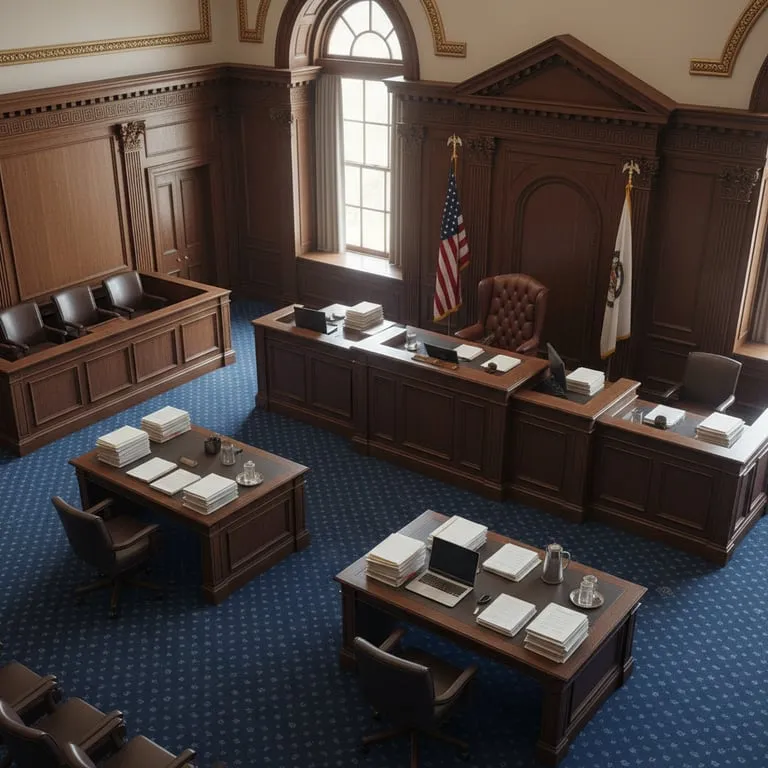
Stepping into a U.S. courtroom can feel like entering a different world, filled with specific roles and a structured flow. Let’s get acquainted with the main players you’ll see and what they do!
The Judge’s Role
First off, you’ve got the judge. They’re like the conductor of the orchestra, making sure everything runs smoothly and according to the rules. They make rulings on legal matters, decide on the admissibility of evidence, and, in bench trials, decide the verdict. They wear a black robe, which, honestly, just adds to the whole authoritative vibe, don’t you think?! They are the ultimate arbiters of the law within the courtroom.
The Attorneys
Then there are the attorneys – the lawyers! They represent the parties involved, whether it’s the prosecution (trying to prove guilt) or the defense (trying to prove innocence or mitigate charges). They present arguments, question witnesses, and introduce evidence. It’s a high-stakes game of persuasion, played with words and facts. They’re the ones you see vigorously questioning or passionately defending someone, and it can get pretty intense! Their job is to advocate zealously for their client’s position.
The Jury’s Importance
And let’s not forget the jury! In many cases, a jury of citizens (usually 12, but can vary) listens to all the evidence and arguments and decides the facts of the case. They’re the ultimate finders of fact, determining guilt or innocence. Imagine the weight of that responsibility; it’s truly humbling to think about. Their role is to apply the law as instructed by the judge to the facts they find.
The whole process kicks off with opening statements from both sides, outlining what they intend to prove. It’s like setting the stage for the play that’s about to unfold. Attorneys then present their cases through evidence and witness testimony. You’ll hear a lot of back-and-forth, objections being made (“Objection, Your Honor!”), and rulings from the judge (“Sustained” or “Overruled”). It’s a dynamic dance of legal strategy, and keeping up can be quite the mental workout!
Decoding the Legal Lingo: Common Terms You’ll Hear
Legal proceedings are often filled with specialized terms. Understanding a few key ones can make a world of difference in following along. Let’s break down some common legal vocabulary!
Voir Dire
The jury selection process. It’s French for “to speak the truth.” Attorneys question potential jurors to ensure impartiality and suitability for the case.
Hearsay
An out-of-court statement offered in court to prove the truth of the matter asserted. It’s generally inadmissible because it can’t be cross-examined, though there are many exceptions!
Sustained/Overruled
These are the judge’s responses to an objection raised by an attorney. If the judge says “Sustained,” they agree with the objection, and the attorney cannot proceed with that line of questioning or introduce that evidence. If “Overruled,” the objection is dismissed, and the attorney can continue.
There are countless legal terms, but understanding a few key ones can make a huge difference. For instance, “discovery” is the phase where both sides exchange information and evidence before trial. It can involve depositions (sworn testimony outside of court), interrogatories (written questions), and requests for documents. It’s a critical stage, often involving mountains of paperwork, and it’s all about making sure everyone comes to trial prepared!
A Glimpse Behind the Gavel: The Trial Process Unpacked
So, what does a typical trial look like? It’s a structured event, and each phase has its purpose. Here’s a simplified rundown, showing the logical flow of justice in action:
1. Jury Selection
(Voir Dire)
2. Opening Statements
Both sides lay out their case and what they intend to prove.
3. Presentation of Evidence
Witnesses testify, and documents/exhibits are introduced.
4. Closing Arguments
Attorneys summarize their case and argue why the jury should rule in their favor.
5. Jury Deliberation
The jury discusses the evidence in private to reach a decision.
6. Verdict
The jury’s final decision is announced.
It’s a meticulous process, designed to ensure every detail is considered. Sometimes, you might even hear about motions, which are formal requests made to the judge for a specific ruling or action. These can happen before, during, or after a trial. It’s all part of the intricate machinery of justice!
Why This Matters To You
You might be thinking, “Why do I need to know all this?” Well, knowledge truly is power! Whether you’re a student, a business owner, or just a curious citizen, understanding the basics of United States courtroom procedures and legal vocabulary can demystify scary situations. It helps you understand news reports, navigate your own legal matters if they ever arise, and appreciate the system that governs us. Don’t you think it’s empowering to feel a little more informed? It certainly helps me feel less anxious when I hear about legal proceedings!
Frequently Asked Questions
What’s the difference between a criminal and civil case?
Great question! In a criminal case, the government prosecutes someone for committing a crime (like theft or assault), aiming for punishment like jail time or fines. In a civil case, it’s usually between private parties (individuals or organizations) who are in a dispute, like a contract issue or personal injury claim, and the goal is typically monetary compensation or specific actions. It’s a fundamental distinction in our legal system!
Can I record a trial in the US?
Generally, cameras in the courtroom are a big maybe! Rules vary significantly by state and even by individual judge. Some courts allow limited recording, especially for appeals, while others strictly prohibit it. It’s always best to check the specific court’s policy beforehand, as unauthorized recording can lead to serious consequences.
What happens if a juror can’t agree on a verdict?
If a jury can’t reach a unanimous decision (or the required majority, depending on the jurisdiction), they are considered “hung.” The judge may then declare a mistrial, meaning the trial ends without a verdict. The prosecution then has to decide whether to retry the case with a new jury. It’s a situation that can significantly prolong legal proceedings.
Is legal jargon always necessary?
While legal professionals use specific terms for precision and to ensure clarity among themselves, the goal in public communication and many court proceedings is often to be understood by everyone involved. However, complex legal concepts do require specific terminology to be accurately conveyed. Thankfully, resources like this post are here to help bridge that gap and make the legal world more accessible!